

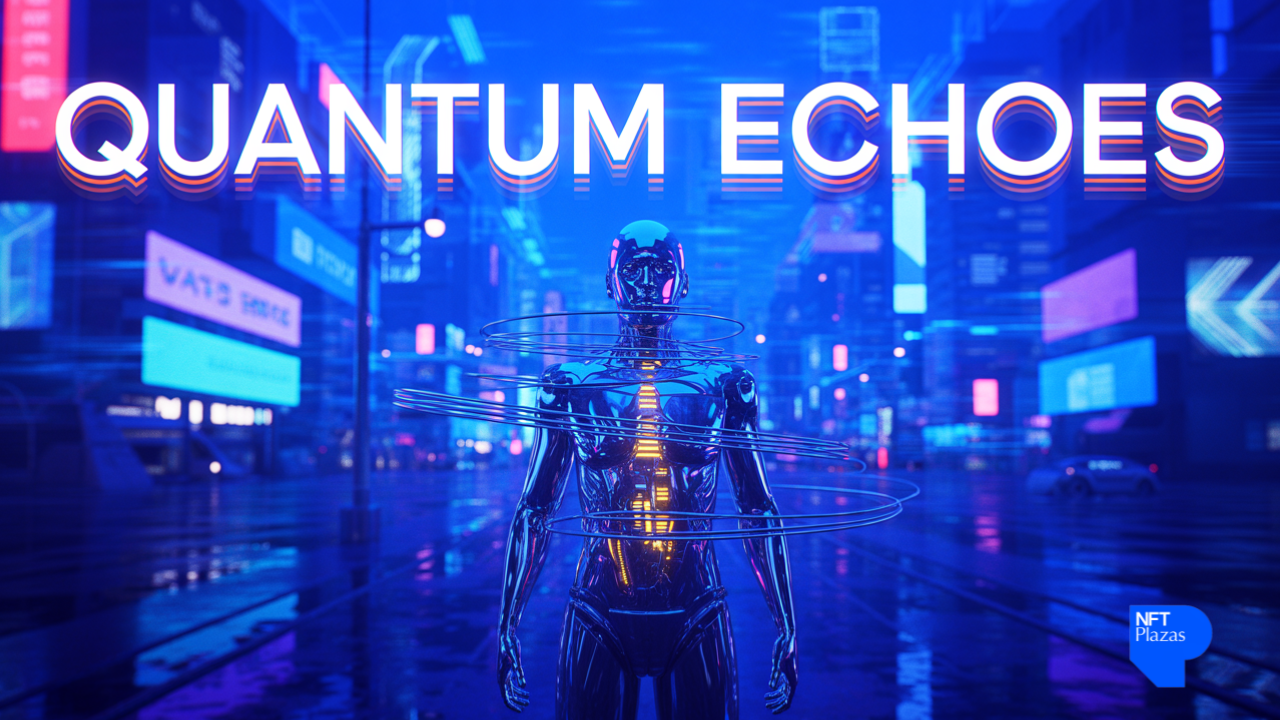
Quantum Echoes uses measurements from real quantum computers to generate verifiable randomness for onchain digital collectibles, demonstrating a new monetizable use case for gate-based quantum hardware.
CASPER, Wyo., USA – September 10, 2026 – Postquant Labs, the developer behind decentralized quantum computing marketplace quip.network, today announced the launch of Quantum Echoes, a digital collectible collection generated using verifiable measurements from gate-based quantum hardware.

The company has dubbed the assets Quantum Forged Tokens (QFTs). The collection demonstrates how quantum processors can generate verifiable randomness for onchain applications, bringing a specialized computing capability into a consumer-facing blockchain product.
Launching as a free open-edition mint on Ethereum through OpenSea, Quantum Echoes uses gate-based quantum computers to introduce verifiable quantum randomness into generative art. Unlike conventional algorithmic generation, each piece is uniquely generated from physically unclonable quantum information, allowing collectors to effectively “roll the RNG” using quantum mechanics.
A New Use Case for Gate-Based Quantum Hardware
Quantum Echoes also marks the launch of Quip Network’s second subnet, a random circuit sampling subnet designed to generate verifiable quantum randomness at scale.
The development creates a new potential use case for gate-based quantum computers, including hardware from providers such as IBM and IonQ. These systems have historically faced challenges competing with leading classical computing clusters on workloads such as combinatorial optimization, which has been the focus of some of Quip Network’s earliest deployments.
The new random circuit sampling subnet gives participating quantum computers another role on the network: supplying verifiable randomness and earning token revenue for their computing capacity.
Postquant Labs says this is the first of several planned subnets targeting gate-based quantum hardware. Each workload is intended to demonstrate useful applications for participating architectures, identify their strengths and limitations, and create opportunities to monetize otherwise unused computing capacity.
Colton Dillion, CEO and co-founder of Postquant Labs, said:
“We’ve spent the last hundred years telling people that quantum is this spooky and mysterious thing that even the smartest people in the world don’t understand. With Quantum Echoes, we are making multimillion-dollar quantum hardware tangible for everyone, showing that quantum computing can become part of our everyday digital lives rather than remaining limited to supercomputing labs or classified facilities.
“And this isn’t only an art drop. Every mint represents a real quantum computer performing useful, paid work. It’s the first time our network has turned quantum hardware into an economic engine rather than simply a research curiosity.”
By leveraging Quip Network’s decentralized marketplace of quantum computers, where hardware providers contribute available capacity and developers can deploy reusable quantum programs, Quantum Echoes provides a public demonstration of how the network can connect quantum hardware with real-world blockchain applications.
From Quantum Benchmarking to Verifiable Randomness
Dr. Richard Carback, CTO and co-founder of Postquant Labs, added:
“Random circuit sampling is a benchmarking tool that demonstrates that a device is genuinely quantum, as classical computers cannot efficiently reproduce the same results. It is the same class of workload associated with landmark quantum advantage demonstrations, where quantum processors perform tasks that are impractical for today’s most powerful classical supercomputers.
“We are repurposing this diagnostic capability to provide a cryptographically secure random number generation service for Quantum Echoes. Every output comes from a real quantum measurement, and its origin can be verified. This demonstrates that quantum hardware can perform useful, paid work on the network, making randomness our second key workload.”
The collection integrates quantum-derived randomness directly into the process of generating onchain assets. Rather than relying exclusively on pseudorandom algorithms, Quantum Echoes derives its traits from measurements performed by physical quantum processors.
Key Features of Quantum Echoes
-
Quantum Verifiable Randomness: Each trait is determined by measurements of an actual quantum state rather than conventional pseudorandom algorithms.
-
Free Open-Edition Mint: A free mint queue gives users access to the common edition without a financial barrier to entry.
-
Eigen Keys: Community partners and loyal members received Eigen Keys that guarantee a rare edition when the collection is revealed. The rare edition consists of 1,000 items featuring enhanced traits generated and verified through the same quantum infrastructure. Users without an Eigen Key can still receive a rare item during the reveal but are not guaranteed one.
Quantum Echoes is available onchain on Ethereum through OpenSea. Holders can reveal their QFTs at echoes.quip.network approximately one week after the mint.
Quantum Randomness Beyond Digital Collectibles
While Quantum Echoes is presented through digital art, the random circuit sampling subnet behind the collection is designed to support applications that require independently verifiable randomness.
Potential use cases include gaming, financial applications and other onchain systems where transparent and independently verifiable random outcomes are valuable.
The launch represents Quip Network’s first public demonstration of quantum randomness as a standalone service. By transforming quantum measurements into a usable blockchain primitive, Postquant Labs aims to position QFTs and the underlying infrastructure as more than a one-time collectible experiment.